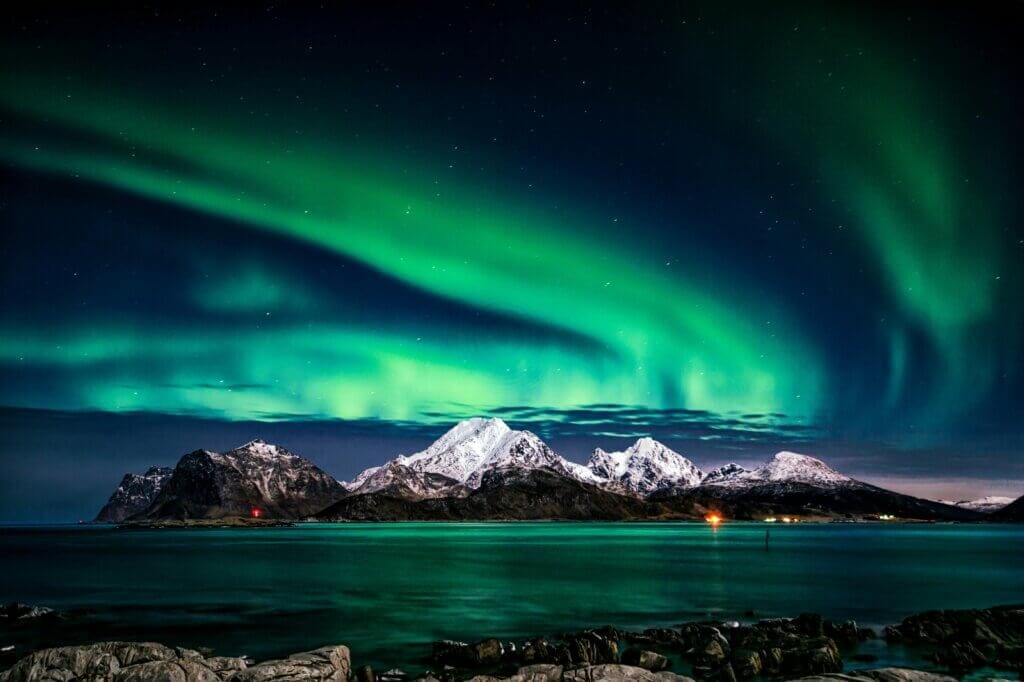

The best time to see northern lights in Norway is from late September to early April, with October to March offering the highest chances thanks to long, dark nights and frequent aurora activity. Choosing northern Norway, monitoring the weather, and staying for several nights can greatly improve your chances of witnessing this unforgettable natural phenomenon.
The best time to see northern lights in Norway is from late September to early April, when long, dark nights create ideal conditions for viewing the Aurora Borealis. While sightings are never guaranteed, travelling during the winter months, choosing locations above the Arctic Circle, and keeping an eye on weather and aurora forecasts can significantly improve your chances. Whether you’re planning a photography trip, an Arctic adventure, or your first aurora holiday, knowing when and where to go is the key to an unforgettable experience.
Best Time to See Northern Lights in Norway
The best time to see northern lights in Norway is during the dark winter months when the nights are long and the skies are clear. Here’s a detailed breakdown of when you should plan your trip to maximize your chances of seeing the Aurora Borealis.
Peak Viewing Season (September – April)
The best time to visit Norway for northern lights spans from late September to early April. During these months, the nights in Norway are long and dark, providing the perfect conditions for aurora sightings. The period from October to March is considered the most ideal for northern lights viewing because of the combination of clear skies, cold temperatures, and peak solar activity.
Why October to March is the Best Time
- Darkness: Norway’s winter months offer the longest nights, which are crucial for visibility. The best time to see northern lights in Norway is when the sky is dark enough to allow the auroras to shine brightly.
- Solar Activity: Solar activity tends to be stronger during this period, increasing the likelihood of visible auroras, particularly during geomagnetic storms.
- Clear Skies: While weather conditions can vary, inland and northern regions often experience crisp, clear winter nights that create favourable viewing conditions.
- Arctic Location: Much of Northern Norway lies beneath the Auroral Oval, the area where auroral activity is most frequent, making destinations like Tromsø and Alta some of the world’s most reliable places to experience the Northern Lights.
Seasonal Breakdown
Autumn (September – November)
- Best for: Fewer crowds and mild weather
- Conditions: During autumn, the days start to shorten, and the chances of seeing the northern lights gradually increase. The weather is still relatively mild, especially in September and October. This is a great time to visit if you want to avoid the winter crowds but still enjoy good aurora activity.
- What to Expect: Autumn landscapes feature colourful foliage, relatively comfortable temperatures, and excellent photography opportunities before heavy snowfall arrives.
Winter (December – February)
- Best for: The ultimate northern lights experience
- Conditions: Winter offers the longest and darkest nights, making it the best time to see northern lights in Norway. The snow-covered landscapes and clear, crisp air provide a magical setting for aurora viewing. If you’re looking for the most intense aurora sightings, winter is the perfect season to visit. The best time to visit Norway for northern lights is undoubtedly from December to February.
- What to Expect: Alongside aurora hunting, visitors can enjoy dog sledding, snowmobiling, reindeer experiences, Sami cultural tours, and Arctic cruises.
Spring (March – April)
- Best for: Longer daylight hours and fewer crowds
- Conditions: By March and April, the days are starting to get longer, but you can still experience fantastic aurora displays. The weather is also milder than in the dead of winter, making it a more comfortable option for travelers. Spring is a great time for those who want to see the northern lights without the large crowds that are typical during peak winter months.
- What to Expect: Alongside aurora hunting, visitors can enjoy dog sledding, snowmobiling, reindeer experiences, Sami cultural tours, and Arctic cruises.
Summer (May – August)
- Best for: Midnight Sun (Not Ideal for Northern Lights)
- Conditions: Unfortunately, the best time to see northern lights in Norway does not coincide with the summer months. During May through August, the Midnight Sun prevents the northern lights from being visible as the sun doesn’t set at all in the northern regions. This makes summer the least ideal time for aurora sightings.
- What to Expect: Although auroras are not visible, summer offers incredible hiking, fjord cruises, kayaking, wildlife watching, and the unforgettable Midnight Sun experience.
Check out this how to travel to antarctica and start planning your trip with dark adventure!
Best Places to See the Northern Lights in Norway
Where you are in Norway can significantly impact your chances of seeing the northern lights. While the aurora can occasionally be seen in southern parts of the country during periods of strong solar activity, Northern Norway above the Arctic Circle offers the most consistent viewing opportunities because it lies within the Auroral Oval.
Tromsø: The Northern Lights Capital
Tromsø, located in northern Norway, is one of the best places to see the northern lights. Known as the “Gateway to the Arctic,” this city offers excellent viewing conditions and is one of the most popular destinations for experiencing the Aurora Borealis. The surrounding mountains, fjords, and islands create spectacular backdrops for both sightseeing and photography.
Why visit Tromsø?
- High chances of aurora sightings throughout the season
- Excellent range of guided aurora tours
- Easy accessibility with international connections
- Plenty of winter activities beyond northern lights hunting
Lofoten Islands: Scenic and Remote
The Lofoten Islands offer breathtaking scenery, and the lack of light pollution makes them an excellent spot for northern lights viewing. The dramatic peaks, fishing villages, and Arctic beaches provide some of Norway’s most iconic aurora photography locations.
The islands’ remote location and minimal urban lighting create favourable conditions for seeing the auroras, especially on clear winter nights.
Alta: Peaceful and Undisturbed
Alta, often referred to as the “City of the Northern Lights,” offers an excellent aurora experience, especially for travellers looking for a quieter destination. Its inland location often experiences stable weather conditions, which can improve visibility compared to coastal areas.
Alta also has a long history of northern lights research, making it an interesting destination for visitors interested in the science behind the aurora.
Svalbard: A Unique Arctic Adventure
Svalbard is located far above the Arctic Circle and offers one of the world’s most unique northern lights experiences. During the Polar Night, when the sun doesn’t rise for several weeks, visitors have the rare opportunity to see the aurora even during daytime hours under certain light conditions.
If you’re looking for a truly extraordinary Arctic adventure, Svalbard offers an unforgettable experience unlike anywhere else in Norway.
Senja & Lyngen Alps: Hidden Gems
Senja and the Lyngen Alps offer a more off-the-beaten-path experience for travellers wanting to avoid larger tourist crowds while still enjoying exceptional northern lights displays. These regions combine dramatic mountains, frozen fjords, and peaceful surroundings, creating ideal conditions for memorable aurora viewing.
Explore this why is antarctica the place to go to and plan your adventurous trip!
Best Time to Visit Norway for Northern Lights Based on Your Travel Style
Whether you are a photographer, adventurer, or family traveler, the best time to visit Norway for northern lights can differ based on your interests. Here’s how to plan your trip based on your travel style.
For Photographers
- Best Time: December to February
- Why: The winter months provide the most stunning contrast for photographing the northern lights against snowy landscapes. The longer nights and snowy terrain make these months the best time to see northern lights in Norway for photographers looking to capture breathtaking shots.
For Adventure Travelers
- Best Time: September to March
- Why: Adventure lovers will enjoy the opportunity to combine outdoor activities like dog sledding, snowshoeing, and skiing with the chance to see the northern lights. The best time to see northern lights in Norway coincides with the winter season, which offers a variety of exciting outdoor activities.
For Budget Travelers
- Best Time: March and April
- Why: These months offer lower prices for flights and accommodations compared to the peak winter months. You can still experience great northern lights activity without breaking the bank, making this the best time to visit Norway for northern lights on a budget.
For Families
- Best Time: Late November to Early March
- Why: Families can enjoy the winter wonderland atmosphere with Christmas activities, snowy landscapes, and the chance to see the northern lights. The cold temperatures and long nights make this the ideal time for a family trip to witness the auroras.
Go through this what to do in seychelles and make your trip the best!
Essential Tips for a Successful Northern Lights Trip
Here are a few tips to increase your chances of experiencing the northern lights:
- Check the Aurora Forecast: Use reliable aurora forecast apps and weather updates before heading out each evening.
- Watch the Weather: Clear skies are just as important as strong aurora activity. Even high solar activity won’t be visible through thick cloud cover.
- Choose a Location with Minimal Light Pollution: Travel away from city lights for the best viewing conditions.
- Stay for Multiple Nights: Since auroras are a natural phenomenon, staying at least 3–4 nights greatly improves your chances of seeing them.
- Be Patient and Flexible: Northern lights can appear suddenly and vary in brightness, movement, and duration.
- Dress Warmly: Layer your clothing, wear insulated boots, gloves, hats, and thermal wear to stay comfortable while waiting outdoors.
- Allow Your Eyes to Adjust: Spend at least 15–20 minutes outside away from bright lights so your eyes can fully adapt to the darkness.
Explore is seychelles safe and make a safer trip!
Northern Lights Photography Tips
Capturing the northern lights on camera can be a challenge, but with the right equipment and camera settings, you can create stunning images of the Aurora Borealis. A little preparation goes a long way, especially in Norway’s cold winter conditions.
Best Camera Settings for Capturing the Aurora
ISO: Set your ISO between 800 and 1600 to balance brightness and image quality. Increase it slightly if the aurora is faint or conditions are particularly dark.
Aperture: Use the widest aperture your lens allows (around f/2.8 to f/4) to capture as much available light as possible.
Shutter Speed: Start with a shutter speed between 5 and 15 seconds. Faster-moving auroras may require shorter exposures, while weaker displays may benefit from slightly longer ones.
Focus: Switch your camera to manual focus and focus on a distant object or the stars before the aurora appears. This helps ensure crisp, sharp images throughout the night.
Essential Equipment
- Tripod: A sturdy tripod is essential for keeping your camera steady during long exposures.
- Extra Batteries: Cold Arctic temperatures drain batteries much faster than normal, so always carry fully charged spares.
- Wide-Angle Lens: A focal length between 14mm and 24mm works well for capturing both the expansive night sky and Norway’s dramatic landscapes.
- Remote Shutter or Timer: Using a remote release or your camera’s timer helps minimise camera shake during long exposures.
How to Adjust ISO, Aperture, and Shutter Speed
- ISO: Start around ISO 800 and adjust depending on the brightness of the aurora and ambient light.
- Aperture: Keep your aperture at its widest setting to maximise light entering the camera.
- Shutter Speed: Begin with approximately 10 seconds, then shorten or lengthen the exposure depending on how quickly the aurora is moving across the sky.
- Photography Tip: Shooting in RAW format gives you greater flexibility when editing colours, exposure, and detail after your trip.
Best Northern Lights Tours in Norway
For those looking to enhance their chances of seeing the auroras, joining a guided tour can be an excellent option. Professional guides know the best spots and are familiar with the weather conditions, which increases your odds of a successful sighting.
Guided Aurora Chase Tours
- Why Join: Joining an aurora chase tour gives you a higher chance of seeing the northern lights because expert guides know where to go based on the current aurora activity and weather conditions. Many tours include photography tips, so you can capture your experience.
- Recommended Tours:
- Tromsø Aurora Chase: One of the most popular tours, offering expert guides who know the best locations and provide warm clothing, photography tips, and hot drinks.
- Lofoten Northern Lights Tour: A smaller, intimate tour focused on showing you the stunning landscapes of the Lofoten Islands while chasing the northern lights.
- Alta Aurora Safari: A unique opportunity to explore the Arctic landscape while chasing the northern lights in the city of Alta.
Benefits of Professional Tours
- Expert Guidance: Local guides who know the best places and times to see the aurora.
- Comfort and Warmth: Many tours provide warm clothing, hot drinks, and shelter from the cold.
- Photography Assistance: Some tours offer professional photographers to help you get the perfect shot.
Plan Your Northern Lights Adventure with Dark Green Adventures
Ready to experience the magic of the northern lights for yourself? Look no further than Dark Green Adventures, offering expertly guided northern lights tours in Norway. With local knowledge, professional photographers, and a personalized experience, you’ll be set to chase the auroras in comfort and style.
Why Choose Dark Green Adventures?
- Expert Guides: With years of experience, the guides know the best spots and conditions for viewing the aurora.
- Tailored Experiences: Choose from a range of tours, including photography-focused trips, adventure excursions, and family-friendly options.
- Memorable Moments: Create unforgettable memories as you explore Norway’s stunning landscapes while chasing the northern lights.
Join Dark Green Adventures for an unforgettable Northern Lights tour in Norway! Explore breathtaking landscapes, chase the auroras with expert guides, and make lifelong memories.
Frequently Asked Questions
Q1. What is the best time to see the northern lights in Norway?
Ans: The best time to see northern lights in Norway is between October and March, with the peak season being from December to February when the nights are longest.
Q2. Can I see the northern lights in Norway in September or April?
Ans: Yes, it is possible to see the northern lights in September and April, but the best time to see northern lights in Norway is during the peak winter months of November to February.
Q3. Where are the best places to see the northern lights in Norway?
Ans: Tromsø, the Lofoten Islands, Alta, Svalbard, and the Lyngen Alps are among the best places to see northern lights in Norway.
Q4. How long should I stay in Norway to see the northern lights?
Ans: Staying for at least 3-4 nights increases your chances of seeing the northern lights, as they can be elusive and unpredictable.
Q5. Can I see the northern lights in Norway during summer?
Ans: No, the best time to see northern lights in Norway is during the winter months. In the summer, the Midnight Sun prevents aurora sightings.
Q6. What activities can I do while waiting for the northern lights?
Ans: You can enjoy dog sledding, snowshoeing, visiting ice hotels, and other winter activities while waiting for the auroras to appear.
Q7. Is it possible to photograph the northern lights without professional equipment?
Ans: Yes, but using a camera with manual settings, a tripod, and a wide-angle lens will improve the quality of your photos.
Q8. How do I join a northern lights tour in Norway?
Ans: Many local tour companies offer northern lights tours. Joining a guided tour is one of the best ways to ensure you have the best chance of seeing the auroras.